Varieties
1121 vs 1509 vs 1718 Basmati: which variety is right for you?
Ask ten rice buyers which Basmati variety is “the best” and you’ll get ten different answers — because the honest answer is that 1121, 1509 and 1718 aren’t ranked against each other, they’re suited to different jobs. Here’s what actually separates them, and how to pick without guessing.
1121 Basmati: the longest grain, the biggest elongation
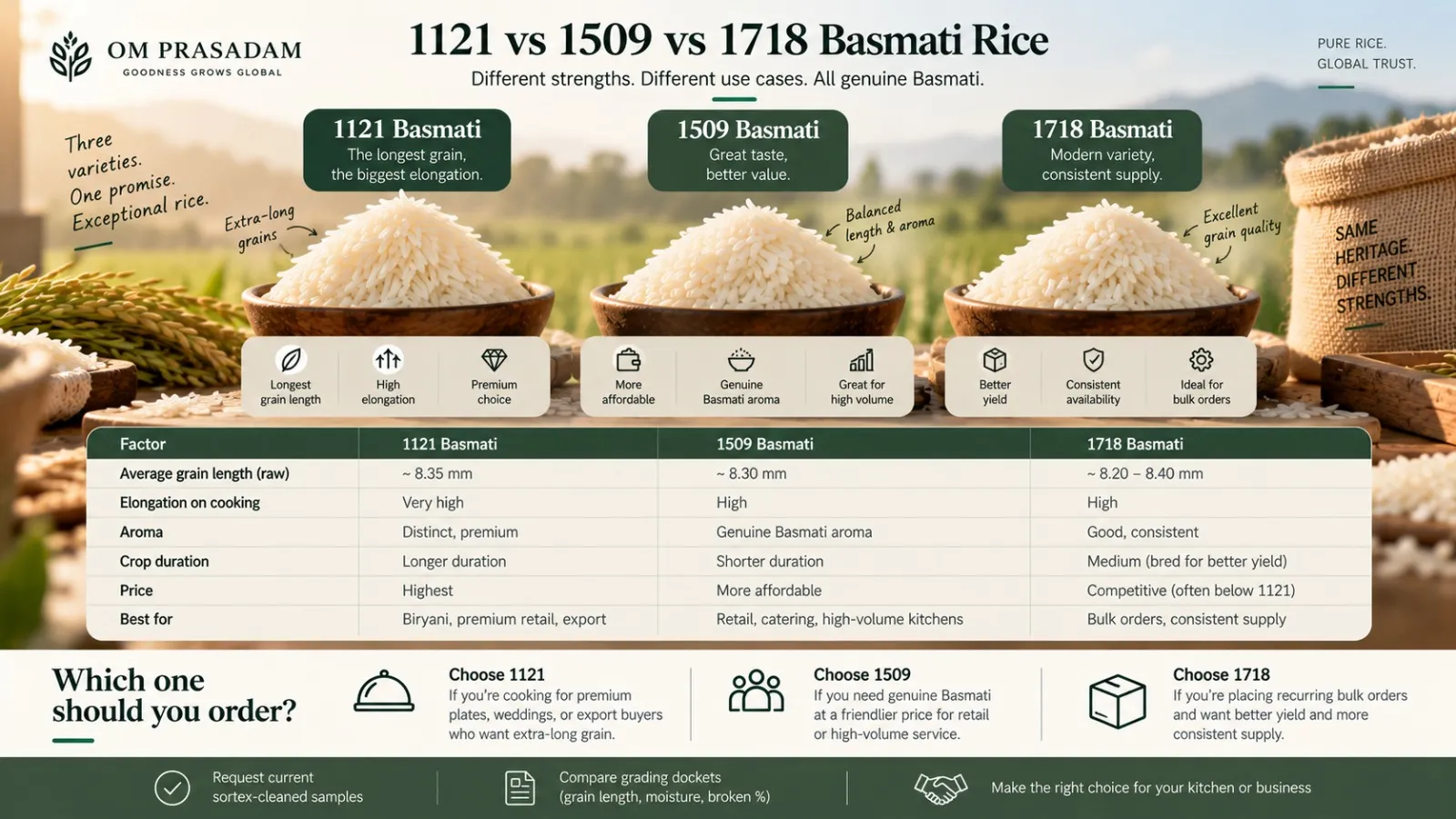
If a menu or a customer specifically asks for “extra-long Basmati,” this is usually what they mean. 1121 Basmati has the longest average grain length in the range — around 8.35mm before cooking — and it’s prized for how much it elongates on cooking without breaking apart. That makes it the default choice for biryani houses, premium retail packs, and export buyers where grain appearance in the final dish matters as much as taste. It commands the highest price of the three, and that price is mostly what you’re paying for: length and elongation, not aroma alone.
1509 Basmati: shorter cycle, tighter cost, still genuinely Basmati
1509 Basmati is a shorter-duration crop than 1121, which generally makes it more consistently available and a notch more affordable. Grain length sits close behind 1121, and it still delivers proper Basmati aroma and elongation — just with slightly tighter margins on both. It’s a strong fit for buyers who want to offer genuine Basmati at a friendlier price point: retail chains running a “value Basmati” SKU, or caterers plating in bulk where a fraction less elongation isn’t going to be noticed on a buffet line.
1718 Basmati: the newer variety balancing yield and grain quality
1718 Basmati sits in similar territory to 1121 on grain length, but comes from a variety bred for better field yield — which can mean steadier availability and pricing across a season. For trade buyers running standing monthly orders where supply consistency matters as much as the grain itself, 1718 is worth specifying and comparing directly against 1121 on the current crop year’s numbers rather than assuming last season’s price gap still holds.
So which one should you actually order?
- Buying for a premium plate, a wedding order, or an export buyer who’s named “extra-long grain” → go with 1121.
- Running high-volume kitchen or retail service where cost per kilo matters more than the last millimetre of grain → 1509 is usually the smarter order.
- Placing a recurring bulk order and want to hedge against seasonal price swings on 1121 → ask for a side-by-side quote on 1718 before you commit.
The safest way to decide isn’t to pick from a description — it’s to compare actual lot specifications side by side, since grain length, moisture and broken percentage shift slightly with every crop year. Request current sortex-cleaned samples and grading dockets for all three before placing a large order, so the decision is based on this season’s grain, not last year’s.